
Dental Implants in Turkey — How They Work and What to Expect
Insights from an English-Speaking Dentist in Çankaya, Ankara
Tooth loss is often dismissed as a cosmetic concern — but its effects on daily life go considerably further than appearance. Missing teeth can reduce chewing efficiency, affect speech, and over time contribute to changes in jaw structure. Dental implants are now widely regarded as one of the most effective solutions for replacing missing teeth, addressing both function and aesthetics in a way that other options typically cannot. This article explains how implants work, what the process involves, and what patients considering implant treatment in Turkey should know before starting.
Contents
What Is a Dental Implant?
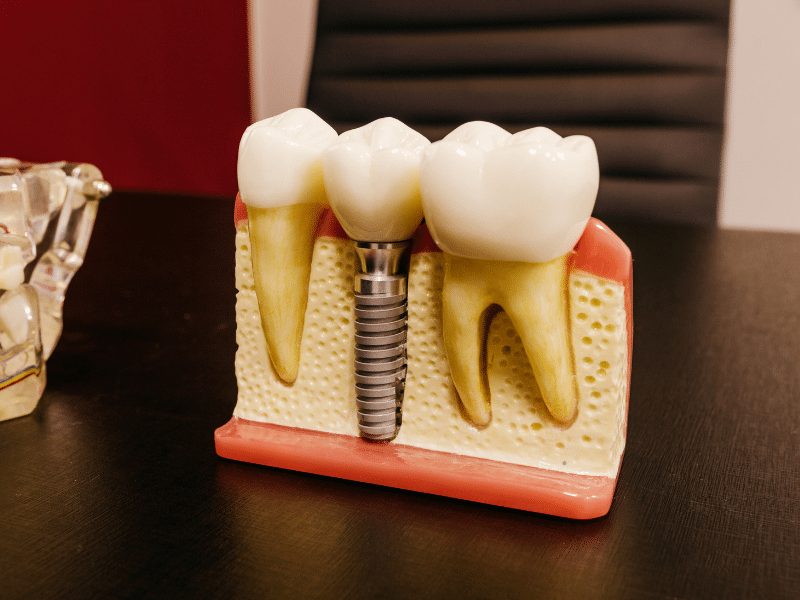
A dental implant is a small titanium fixture placed into the jawbone to serve as an artificial tooth root. Unlike dentures, which rest on the gum surface, or bridges, which rely on adjacent teeth for support, an implant is anchored directly into the bone — providing a stable foundation for the crown, bridge, or other restoration placed on top of it.
Titanium is used because of its biocompatibility: over a period of weeks to months following placement, the bone gradually fuses with the implant surface in a process called osseointegration. Once this fusion is complete, the implant becomes a fixed part of the jaw structure, capable of bearing the forces generated during chewing and speaking.
The restoration placed on the implant — typically a ceramic or zirconia crown — is matched to the colour and shape of the surrounding teeth. The result is a replacement tooth that functions and appears similar to a natural one.
How Implants Affect Daily Life
The practical impact of missing teeth is something that many patients underestimate — often because the changes occur gradually. Avoiding certain foods, adjusting speech, or becoming self-conscious about smiling are all common consequences that accumulate quietly over time.
Implant treatment addresses several of these concerns at once. Patients commonly report that chewing becomes more comfortable and efficient, and that foods previously avoided — including harder or more textured options — become manageable again. Speech patterns affected by missing teeth, particularly in the front of the mouth, can also improve once the gap is filled.
There is also a less visible benefit: bone preservation. When a tooth is lost, the jawbone in that area no longer receives the stimulation it needs to maintain its volume. Over time, this can lead to gradual bone resorption — a change that affects facial structure and can complicate future dental treatment. An implant, by replicating the function of a tooth root, helps slow this process.
The Closest Thing to a Natural Tooth
Among the available options for replacing missing teeth — implants, fixed bridges, and removable dentures — implants are generally considered to offer the most natural experience in terms of both function and feel. This is largely because they are the only option that replicates the root as well as the crown of the tooth.
A fixed bridge can restore the appearance of a missing tooth and allow for reasonably comfortable chewing, but it requires preparation of the adjacent teeth — healthy tooth structure must be reduced to create the anchor points for the bridge. An implant, by contrast, does not affect the neighbouring teeth at all, preserving the integrity of the rest of the dentition.
Removable dentures offer an option for patients with multiple missing teeth or insufficient bone for implants, but they do not replicate root-level function and require removal for cleaning. Many patients who transition from dentures to implant-supported restorations report a significant improvement in comfort and confidence.
What the Treatment Process Involves
Implant treatment is a staged process. The timeline varies depending on the patient’s bone quality, the number of implants being placed, and whether any preparatory procedures — such as bone grafting or tooth extraction — are needed before implant placement can begin.
The process typically begins with a comprehensive clinical and radiographic assessment. Cone beam CT (CBCT) imaging is commonly used to evaluate the volume and density of the available bone and to plan the precise positioning of the implant. This planning stage is critical — both to the success of the procedure and to the final aesthetic result.
Once the implant is placed, a healing period follows during which osseointegration takes place. The duration of this phase varies between patients, but commonly ranges from several weeks to a few months. After the implant has integrated sufficiently, the abutment and final restoration are fitted.
For patients travelling to Turkey for implant treatment, the staged nature of the process is an important practical consideration. Some stages can be consolidated, and we can discuss realistic scheduling options during the consultation — including what can be completed in a single visit and what requires a return appointment.
Who Is a Suitable Candidate?
Most adults with good general health and adequate bone volume are potential candidates for implant treatment. The assessment looks at several factors: the condition of the jawbone at the site of the missing tooth, the health of the surrounding gum and teeth, and the patient’s general medical history.
Certain conditions — including uncontrolled diabetes, active gum disease, or a history of specific medications affecting bone density — may influence implant planning or require additional preparation before treatment can proceed. These are not necessarily disqualifying factors, but they are relevant to the assessment and the treatment plan.
Bone volume is one of the most commonly cited concerns. Patients who have had a missing tooth for some time may have experienced bone resorption at that site. In many cases, bone grafting procedures can rebuild sufficient volume for implant placement — but this adds time and stages to the overall treatment. A thorough assessment will determine whether this is necessary and, if so, what the implications are for the treatment timeline.
Dental Implants in Çankaya, Ankara
Our clinic in Çankaya, Ankara provides implant consultations and treatment for both local patients and those visiting Turkey from abroad. Implant treatment is one of the most frequently requested procedures among international patients, and we are experienced in structuring treatment plans that work within the practical constraints of travel.
We communicate in English throughout the process — assessment, planning, the procedure itself, and aftercare. For patients returning to their home country between stages, we provide clear written documentation and aftercare instructions so that any follow-up can be managed locally if needed.
Every implant case at our clinic begins with an individual assessment. We do not offer package-based implant treatments; the plan is built around what is clinically appropriate for each patient, and we are direct about what is and is not achievable in a given situation.
Related Treatments at Our Clinic
Frequently Asked Questions
How long do dental implants last?
The implant fixture itself, once integrated with the bone, is designed to be a long-term solution. The crown placed on top may require replacement over time depending on wear. With consistent oral hygiene and regular dental check-ups, well-placed implants can remain functional for many years.
Is the implant procedure painful?
The placement procedure is performed under local anaesthesia, so patients do not experience pain during the surgery itself. Some discomfort, swelling, or sensitivity in the days following the procedure is normal and typically manageable. Your dentist will provide clear post-operative guidance.
Can I get implants if I have bone loss?
In many cases, yes — but it depends on the extent of the bone loss. Bone grafting procedures can often restore sufficient volume for implant placement. This is assessed during the initial examination using imaging. Your dentist will advise whether grafting is needed and what effect it has on the overall timeline.
How long does the full implant process take?
From placement to the final restoration, the process commonly takes several months — largely because of the time needed for osseointegration. The exact timeline depends on the individual case, whether any preparatory work is needed, and how quickly healing progresses. We outline a realistic estimate during the consultation.
I am coming to Turkey for implant treatment — can the process be completed in one visit?
Depending on the case, some elements of implant treatment can be consolidated into a single visit. However, standard implant treatment involves a healing period between placement and the final restoration, which means at least two visits are typically required. We can discuss what is achievable within your travel plans during the consultation.
How do I care for an implant after treatment?
Implant-supported restorations are maintained in the same way as natural teeth — twice-daily brushing, daily interdental cleaning, and regular professional check-ups. There are no special cleaning products required in most cases. Good oral hygiene is the single most important factor in the long-term success of an implant.
Book a Consultation
📍 Mustafa Kemal, 2131. Sk. No:30 İç Kapı No:15, 06510 Çankaya / Ankara