
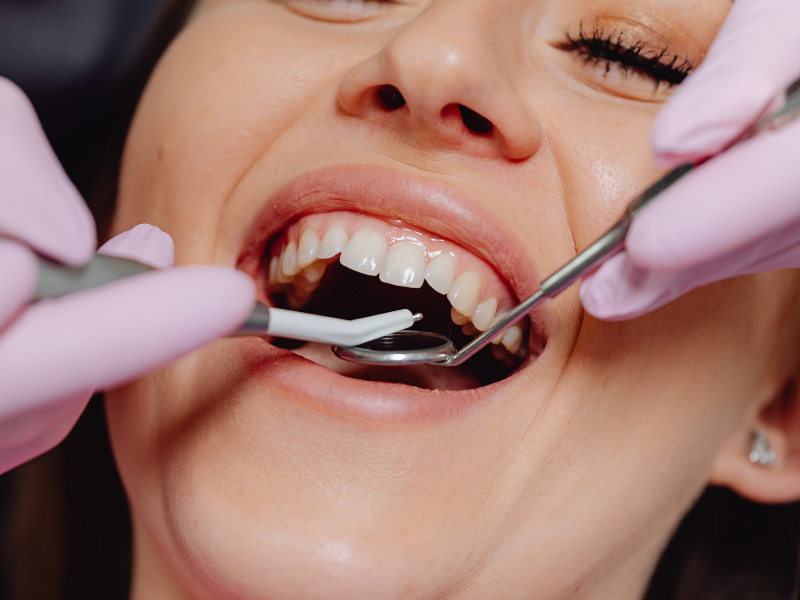
Dental Fillings — What to Expect After Treatment and How to Make Them Last
Aftercare Guidance from an English-Speaking Dentist in Çankaya, Ankara
A dental filling is one of the most common procedures in dentistry — straightforward in most cases, and completed in a single appointment. But the care taken afterwards has a direct bearing on how comfortably the tooth settles and how long the restoration performs. This guide covers what to expect in the hours after a filling, how to manage any sensitivity, which habits support or undermine the longevity of the restoration, and when symptoms warrant a follow-up appointment.
Contents
What Is a Dental Filling?
A dental filling restores a tooth that has been damaged by decay, fracture, or wear. The procedure involves removing the affected tissue, cleaning the area, and filling the cavity with a restorative material to rebuild the tooth’s shape and function.
The most commonly used filling material today is composite resin — a tooth-coloured material that bonds directly to the tooth structure and is virtually indistinguishable from natural enamel in most situations. Amalgam (silver) fillings, which have been used for over a century, are less frequently placed now but remain in use for certain posterior restorations. Ceramic and porcelain inlays or onlays are used in cases where a larger restoration is needed and a higher-strength option is preferred.
The primary aim of a filling is to stop decay from progressing further and to restore the tooth’s ability to function comfortably in chewing. When placed early — before decay reaches the nerve — the procedure is typically straightforward and requires only local anaesthesia.
The First 24 Hours After a Filling
If local anaesthesia was used during the procedure — which is standard for most fillings — the numbness will persist for two to four hours after the appointment. Eating or drinking hot liquids while the mouth is still numb is best avoided: the absence of sensation makes it easy to bite the cheek or tongue without realising, and to misjudge temperatures.
Once the anaesthetic has worn off, composite fillings are fully set and can withstand normal biting. That said, avoiding very hard or very sticky foods on the day of the procedure is a reasonable precaution while the tooth is still settling. If amalgam was used, harder foods are better avoided for the full 24-hour period to allow the material to reach its working strength.
It is also worth being mindful of temperature sensitivity in the first day or two. Extremely hot or cold foods and drinks can provoke a brief, sharp response in a tooth that has just been treated — this is normal and typically settles quickly. Opting for food and drink at moderate temperatures during this period is a practical measure.
Sensitivity and Discomfort — What’s Normal?
Some degree of sensitivity after a filling is expected and does not indicate that something has gone wrong. The tooth has been through a clinical procedure — tissue has been removed, the area has been dried and treated, and a restoration has been placed. A period of adjustment is normal.
Temperature sensitivity — brief discomfort when eating something cold or hot — is the most common post-filling symptom. It typically resolves within one to two weeks as the tooth settles. A dull ache at the injection site from the anaesthetic is also common in the first day or so.
Discomfort when biting down can indicate that the filling is sitting slightly high — meaning it is making contact before the opposing teeth do, placing uneven pressure on that tooth. This is a straightforward adjustment that the dentist can make in a very brief appointment. It does not require the filling to be replaced; a small amount of polishing to reduce the height is usually all that is needed.
Sensitivity that is severe, that worsens over time rather than improving, or that extends beyond two weeks warrants a follow-up assessment. In some cases — particularly where the decay was deep and close to the nerve — post-treatment sensitivity can indicate that the pulp has been affected and further evaluation is needed.
Oral Care After a Filling
There is no need to change your oral hygiene routine after a filling — in fact, maintaining it consistently is one of the most important things you can do for the longevity of the restoration. Brushing twice daily and cleaning between the teeth daily should continue as normal.
When flossing around a newly filled tooth, use a gentle motion — avoid snapping the floss down forcefully into the gum. The filling margin — the edge where the restoration meets the natural tooth — is a site where plaque can accumulate if not cleaned carefully, and where secondary decay most commonly develops over time.
Using a fluoride toothpaste supports the remineralisation of the surrounding enamel and helps protect the tooth-filling junction from decay. If you use a mouthwash, an alcohol-free formulation is generally preferable, particularly in the first few days after a procedure.
Foods and Habits to Avoid
Composite fillings are strong under normal biting forces, but they are not indestructible. Certain habits and food choices place excessive or inappropriate loads on restorations and can cause them to chip, crack, or dislodge prematurely.
Chewing ice, biting into very hard foods (such as hard sweets, unpopped popcorn kernels, or hard bread crusts with significant force), or using the teeth to open packaging places point-loading stress on restorations that they are not designed to withstand. These habits can damage natural teeth just as readily as fillings — but restorations are often the first to show the effect.
Sticky foods — chewing gum, caramels, and soft sweets that adhere — can apply pulling forces to a filling, particularly if the restoration is in an area subject to significant movement during chewing. While a well-placed filling should not be dislodged by normal chewing, repeatedly exposing a marginal area to adhesive pulling forces is not ideal.
Highly acidic food and drink — carbonated soft drinks, citrus juices, and vinegar-based foods — can gradually erode the enamel surrounding a filling over time, weakening the junction between the restoration and the tooth. This does not mean eliminating these foods, but rinsing with water afterwards and not exposing the teeth to them for extended periods makes a practical difference.
Smoking affects both healing and aesthetics: it slows tissue recovery in the short term and stains composite restorations over time, causing them to discolour unevenly relative to the surrounding teeth.
For patients who grind or clench their teeth — a condition known as bruxism — the forces generated during sleep can far exceed those of normal chewing. This is a significant risk factor for filling fracture, particularly in the posterior teeth. If this applies to you, a custom night guard is the most effective protective measure and is worth discussing with your dentist.
How Long Do Fillings Last?
The lifespan of a filling varies depending on the material used, the size and location of the restoration, and — significantly — the patient’s oral hygiene and dietary habits.
Composite fillings typically perform well for five to ten years before replacement may be needed, though many last considerably longer with good care. Amalgam fillings have historically had a longer average lifespan, particularly in the posterior region where biting forces are highest. Ceramic and porcelain restorations — inlays, onlays, and indirect composite restorations — can last considerably longer when properly maintained, as they are more resistant to wear and staining than direct composite.
Regular dental check-ups allow the dentist to monitor the condition of existing restorations — checking for marginal breakdown, secondary decay, or wear — and to address any issues before they progress to a point where replacement is unavoidable. A small repair or polish is always preferable to a full replacement.
When to Contact Your Dentist
Most post-filling sensitivity resolves on its own within one to two weeks. However, certain symptoms warrant professional assessment rather than a wait-and-see approach.
Contact your dentist if pain or sensitivity persists beyond two weeks without improvement, if there is swelling in the gum or face near the treated tooth, if you notice that the filling feels significantly high when biting and the discomfort has not settled within a day or two, if the filling feels loose, cracked, or has come away from the tooth entirely, or if you experience pain severe enough to disturb sleep. These situations require clinical assessment and, in most cases, a straightforward resolution — but they should not be left unaddressed.
Dental Care in Çankaya, Ankara
Our clinic in Çankaya, Ankara provides restorative dental treatment for both local patients and international visitors. We communicate in English throughout, which is particularly important when it comes to aftercare instructions — clear guidance makes a real difference to how comfortably a patient manages the recovery period, especially when they will be travelling home shortly after treatment.
We provide written aftercare instructions and treatment documentation as standard for all patients, so that any follow-up required at home can be handled smoothly by a local dentist with full information about the work that was done.
Related Treatments at Our Clinic
Frequently Asked Questions
Can I eat immediately after a filling?
If composite was used, the filling is fully hardened by the end of the appointment and eating is possible once the anaesthetic has worn off. Avoid eating while the mouth is still numb to prevent accidentally biting the cheek or tongue. If amalgam was used, harder foods are best avoided for 24 hours.
How long will sensitivity last after a filling?
Mild sensitivity to temperature and pressure typically resolves within one to two weeks. If sensitivity is increasing rather than improving, or persists beyond this period, a follow-up assessment is advisable.
My bite feels off after the filling — is this normal?
A filling that sits slightly high will cause the treated tooth to make contact before the rest of the bite, which can feel uncomfortable. This is a common and easily corrected issue — contact your dentist for a brief adjustment appointment. It does not require replacing the filling.
How long does a composite filling last?
Composite fillings typically last five to ten years, though many perform well beyond this with consistent oral hygiene and regular check-ups. The location of the filling, the size of the restoration, and individual habits all influence longevity.
I grind my teeth — will this affect my filling?
Yes. Bruxism (teeth grinding or clenching) generates forces that significantly exceed those of normal chewing and can fracture or wear down fillings more quickly. A custom-made night guard distributes these forces more evenly and is the most effective protective measure. Discuss this with your dentist if it applies to you.
I had a filling placed in Ankara and am now back home — who do I contact if I have a problem?
You can contact our clinic directly with any questions. We provide written documentation of all treatments, which means any local dentist can review the details of what was done and address any follow-up needs. For issues requiring in-person treatment, your local dentist can manage most post-filling concerns with the information we provide.
Book an Appointment
📍 Mustafa Kemal, 2131. Sk. No:30 İç Kapı No:15, 06510 Çankaya / Ankara