
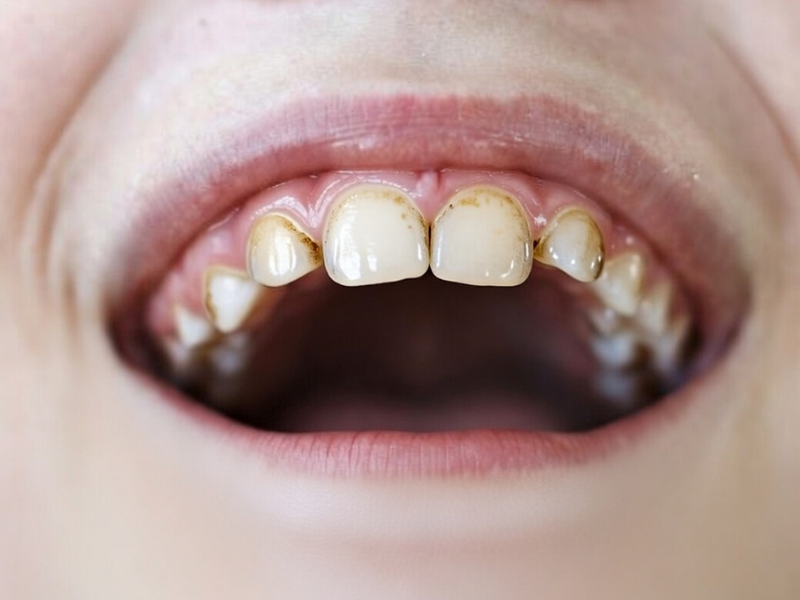
Black Stains on Teeth — Causes, Treatment, and Prevention
Insights from an English-Speaking Dentist in Çankaya, Ankara
Dark or black staining on teeth is a common concern — and one that patients often either dismiss as purely cosmetic or, conversely, assume is a sign of serious decay. In practice, the answer lies somewhere in between. The cause of the staining determines the appropriate response, and not all black marks on teeth are the same thing. This article outlines the most common causes, how each is typically addressed, and when a dental assessment is genuinely necessary.
Contents
What Causes Black Stains on Teeth?
1. Tartar and Plaque Build-Up
When plaque — the soft bacterial film that forms continuously on tooth surfaces — is not removed through regular brushing and interdental cleaning, it hardens into tartar (diş taşı). Over time, tartar can darken significantly, particularly at the gum line and on the inner surfaces of the lower front teeth. This dark, calcified deposit is not removable by brushing and requires professional cleaning to address. It is one of the most common causes of dark staining seen in clinical practice.
2. Dietary and Lifestyle Staining — Tea, Coffee, and Smoking
Chromogenic compounds found in tea, coffee, red wine, and certain foods adhere to the enamel surface over time, producing surface staining that ranges from yellow to dark brown or black. Tobacco use — both smoked and smokeless — is particularly associated with heavy, persistent staining that can penetrate the enamel surface and become difficult to remove with standard cleaning. These are extrinsic stains, meaning they originate from outside the tooth structure, but they can become embedded with repeated exposure over years.
3. Tooth Decay
Dark spots or black areas on the tooth surface can indicate active decay. In the early stages, demineralised enamel may appear as a chalky white or light brown area; as decay progresses, the affected tissue darkens. Black pitting or discolouration — particularly in the grooves of the back teeth or between teeth — warrants professional assessment. Unlike surface staining, decay involves structural damage to the tooth and requires active treatment, not cleaning.
4. Old or Deteriorating Dental Fillings
Older amalgam (silver) fillings can cause dark discolouration of the surrounding tooth structure over time. The metallic compounds in amalgam can leach into the dentine, producing a grey or black shadow visible through the tooth. Additionally, as fillings age, marginal gaps can develop where bacteria accumulate — leading to secondary decay beneath or around the restoration that may appear as dark staining at the filling edge. Both situations are typically identifiable on examination.
5. Certain Medications and Mouthwashes
Some medications are associated with tooth discolouration. Chlorhexidine — an antiseptic commonly found in prescription mouthwashes used to treat gum disease — is a well-documented cause of dark brown or black staining with extended use. Certain antibiotics, particularly tetracyclines taken during childhood while teeth are developing, can cause intrinsic discolouration that is incorporated into the tooth structure itself and cannot be removed by cleaning. Iron supplements taken in liquid form can also contribute to surface staining.
How Are Black Stains Treated?
Treatment depends entirely on the cause of the staining. There is no single approach that works for all types of dark discolouration — which is why identifying the source is the necessary first step.
Professional Scaling and Cleaning
For staining caused by tartar build-up, professional scaling (diş taşı temizliği) removes the hardened deposits from the tooth surface and gum line. This is the standard first step for patients presenting with dark gum-line staining and is typically completed in a single appointment.
Airflow and Polishing
Extrinsic surface staining from food, drink, or tobacco can often be addressed with airflow treatment — a high-pressure stream of air, water, and fine powder that removes surface deposits — or with conventional polishing. These are adjunctive procedures typically performed alongside a professional cleaning.
Decay Treatment
If staining is associated with active decay, the affected tissue is removed and the tooth is restored — typically with a tooth-coloured composite filling. The approach depends on the extent of the decay; deeper lesions may require more involved treatment such as root canal therapy before restoration.
Filling Replacement
Old amalgam fillings that are causing discolouration or that have deteriorated can be removed and replaced with tooth-coloured composite or ceramic restorations. This addresses both the aesthetic concern and any functional issues associated with failing margins.
Teeth Whitening
For extrinsic staining that persists after professional cleaning, or for generalised discolouration, professional whitening treatment can be an effective option. It is important to note that whitening does not affect existing restorations such as crowns or fillings — shade matching after whitening may need to be considered if restorations are also being updated.
How to Prevent Staining
Many forms of tooth staining are largely preventable with consistent habits. The following contribute meaningfully to keeping teeth free of discolouration over time.
Brushing twice daily with a soft-bristled toothbrush removes the plaque that, if left in place, hardens into tartar and darkens. Daily interdental cleaning — with floss or interdental brushes — addresses the spaces between teeth where surface staining and decay most commonly begin. Rinsing with water after consuming heavily pigmented drinks such as tea or coffee can reduce the contact time of chromogenic compounds with the enamel surface.
Reducing or eliminating tobacco use has a significant impact on staining, particularly for patients who smoke regularly. Tobacco-related staining is among the most resistant to removal and tends to recur quickly without a change in habit.
Regular professional cleaning at six- to twelve-month intervals removes tartar before it accumulates significantly and gives the clinician the opportunity to identify early staining or decay before it becomes more difficult to manage.
When to See a Dentist
Not all dark marks on teeth require urgent attention — but some do, and the difficulty is that the appearance of a stain does not reliably indicate its cause. A flat, dark patch along the gum line that has been stable for years is very likely tartar-related. A black pit in the biting surface of a molar that has appeared recently is a different matter.
Prompt assessment is advisable if staining appears or worsens quickly, if a dark area is accompanied by sensitivity or pain, if the discolouration is localised to a specific area of the tooth surface (particularly a groove or margin), or if there is visible pitting or cavitation in the affected area. These features raise the possibility of active decay, which progresses and becomes more difficult to treat the longer it is left.
For patients who are unsure whether a dark mark is cosmetic or clinical, the appropriate step is a dental examination. An X-ray can confirm or rule out decay beneath the surface in cases where the clinical picture is unclear.
Dental Care in Çankaya, Ankara
Our clinic in Çankaya, Ankara offers examination, professional cleaning, and a full range of restorative and aesthetic treatments for both local patients and international visitors. We communicate in English throughout, which is particularly valuable for patients who need to describe symptoms clearly, understand a diagnosis, or follow through on treatment recommendations without uncertainty.
For patients visiting Turkey and seeking a dental check-up as part of their trip — whether for a specific concern like staining or for a broader assessment — we recommend contacting us in advance to schedule appropriate time.
Related Treatments at Our Clinic
Frequently Asked Questions
Are black stains on teeth always a sign of decay?
No. Black staining is more commonly caused by tartar build-up, dietary pigments, or tobacco than by decay. However, a dark mark that is pitted, localised, or accompanied by sensitivity warrants professional assessment, as decay can present similarly and requires a clinical examination to rule out.
Can teeth whitening remove black stains?
Whitening can address extrinsic surface staining that remains after professional cleaning. It will not remove staining caused by tartar, decay, or discolouration originating from within the tooth structure (intrinsic staining). A cleaning and examination should take place before whitening is considered.
Will professional cleaning remove all the staining?
Professional scaling and polishing removes tartar and most surface staining effectively. Heavily embedded tobacco staining or intrinsic discolouration may require additional treatment. Your dentist will advise on realistic expectations after the initial cleaning.
My old fillings are causing dark staining — what can be done?
Old amalgam fillings that are causing grey or black discolouration of the surrounding tooth can be replaced with tooth-coloured composite or ceramic restorations. The suitability of replacement depends on the condition of the filling and the underlying tooth, which is assessed during the examination.
How can I reduce staining from tea and coffee?
Rinsing with water after drinking tea or coffee reduces the contact time of staining compounds with the enamel surface. Using a straw for cold drinks limits direct contact with the front teeth. Regular professional cleaning removes accumulated surface staining before it becomes embedded.
I am visiting Ankara — can I get a cleaning and check-up during my trip?
Yes. A professional cleaning and examination can typically be completed in a single appointment. If additional treatment is needed, we will advise on what can be addressed during your stay and what may require a follow-up visit. Contact us in advance to schedule appropriately.
Book an Appointment
📍 Mustafa Kemal, 2131. Sk. No:30 İç Kapı No:15, 06510 Çankaya / Ankara