
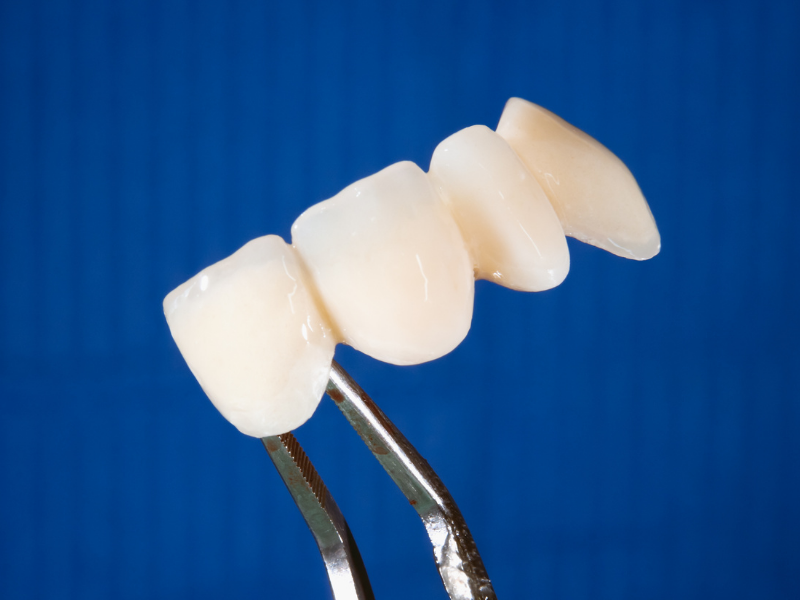
Zirconia Crowns in Turkey — Strength, Aesthetics, and What to Expect
Insights from an English-Speaking Dentist in Çankaya, Ankara
When patients consider dental crowns, they typically want two things: a result that looks natural and a restoration that holds up over time. For much of dental history, these two goals were in tension — materials that looked good were often less durable, and materials that were strong often looked artificial. Zirconia has changed that equation. At our clinic in Çankaya, Ankara, zirconia crowns are among the most frequently used restorations for patients seeking both functional and aesthetic outcomes. This article explains what zirconia is, how it compares to other crown options, and what patients should know before pursuing treatment.
Contents
What Is a Zirconia Crown?
A dental crown is a cap placed over a prepared tooth to restore its shape, strength, and appearance. Crowns are used in a range of clinical situations — following root canal treatment, to restore a severely damaged or decayed tooth, as part of a bridge, or on top of a dental implant.
Zirconia (zirconium dioxide) is a ceramic material used in dentistry for its combination of high strength and aesthetic properties. Unlike earlier generations of porcelain-fused-to-metal (PFM) crowns, zirconia crowns contain no metal substructure. The entire restoration is made from the ceramic material, which allows light to pass through it in a way that more closely resembles natural tooth enamel.
Modern zirconia is available in varying formulations — from high-strength monolithic zirconia used in posterior (back) teeth to more translucent, layered versions used where aesthetics are the primary concern, such as in the front of the mouth. The specific type used is selected based on the location of the tooth, the forces it will bear, and the aesthetic requirements of the case.
Zirconia vs Other Crown Materials
The most common alternatives to zirconia crowns are porcelain-fused-to-metal (PFM) crowns and full porcelain (all-ceramic) crowns. Each has its own characteristics, and the right choice depends on the clinical situation.
PFM crowns have been used for decades and remain a reliable option in many situations. However, the metal substructure can create a dark line at the gum margin over time — particularly as the gum recedes slightly with age — and the metal can cause sensitivity in patients with certain allergies. For patients seeking an entirely metal-free restoration, zirconia is the stronger alternative.
Traditional all-ceramic crowns offer excellent aesthetics but can be more brittle under high biting forces — making them less suitable for posterior teeth in patients who grind or clench. Zirconia addresses this limitation: modern formulations are substantially stronger than earlier all-ceramic options, making them appropriate for both front and back teeth.
For patients who have existing PFM crowns and are considering replacement — either because of aesthetic concerns or because the crowns are aging — zirconia is frequently the material of choice at replacement.
Why Zirconia Is Widely Used
Zirconia has become one of the most commonly used crown materials in modern restorative dentistry for several reasons that are clinically meaningful rather than simply marketing claims.
Its biocompatibility is one of the most significant. Zirconia does not provoke an immune response in the surrounding tissue, and its smooth surface is less hospitable to bacterial adhesion than metal. This makes it well-tolerated at the gum margin — an area that is critical both for aesthetics and for periodontal health.
The optical properties of zirconia are also clinically relevant. Unlike opaque materials that reflect light uniformly, zirconia transmits some light and scatters it in a way that produces depth and variation — qualities that natural enamel has and that earlier restorations struggled to replicate. In the anterior (front) region of the mouth, this translucency is the difference between a restoration that blends and one that stands out.
Finally, its mechanical strength allows it to withstand the forces generated in normal function — including in the posterior region where bite forces are highest. This versatility means that zirconia can be used consistently across a full-mouth restoration rather than requiring different materials for different zones.
Who Is It Suitable For?
Zirconia crowns are a clinically appropriate option for a wide range of patients and situations. They are commonly used to restore teeth that are significantly decayed or structurally compromised, to protect teeth following root canal treatment, to improve the appearance of teeth that are severely discoloured or misshapen, and as the crown component on dental implants.
Patients who have existing metal-containing crowns and are unhappy with the aesthetic result — or who have developed sensitivity or gum changes at the crown margin — may find zirconia a suitable replacement option. The absence of metal also makes zirconia appropriate for patients with known metal sensitivities.
As with any restorative treatment, candidacy depends on an individual clinical assessment. The health of the underlying tooth and surrounding gum tissue, the position of the tooth in the arch, and the patient’s bite all factor into whether a crown is indicated and which material is most appropriate. A thorough examination is always the starting point.
What the Treatment Process Involves
Crown treatment typically takes place over two appointments. At the first, the tooth is prepared — a controlled amount of tooth structure is removed to create space for the crown — and an impression or digital scan is taken. A temporary crown is placed to protect the prepared tooth while the final restoration is fabricated in the dental laboratory.
The laboratory phase takes several days to a couple of weeks, depending on the complexity of the case and the type of zirconia being used. At the second appointment, the temporary crown is removed, the fit and appearance of the final crown are assessed, and it is permanently cemented or bonded in place.
For patients visiting Turkey within a defined timeframe, it is often possible to complete both appointments within a single trip — provided sufficient time is allowed between the preparation and fitting appointments for the laboratory work to be completed. We can discuss realistic scheduling options during an initial consultation.
Longevity and Maintenance
Zirconia crowns, when properly planned and placed, are designed to perform well over a significant period. The material itself is highly resistant to fracture and wear under normal biting forces. The longevity of any crown, however, is also influenced by factors the patient controls — primarily oral hygiene and attendance at regular check-ups.
Crowns do not decay, but the natural tooth structure beneath them can. Plaque accumulation at the margin — where the crown meets the tooth and gum — can lead to decay in the underlying tooth if not addressed through consistent brushing and interdental cleaning. This is the most common cause of crown failure over time, and it is entirely preventable.
Patients who grind or clench their teeth (bruxism) place higher forces on restorations than normal function generates. If this is relevant to your situation, your dentist may recommend a night guard to protect both the crowns and the remaining natural teeth.
Zirconia Crowns in Çankaya, Ankara
Our clinic in Çankaya, Ankara provides zirconia crown treatment for both local patients and international visitors. We work with an experienced dental laboratory and select materials based on the clinical requirements of each individual case — not on a standard formula applied to every patient.
We communicate in English throughout the process, which is particularly important for patients managing their treatment remotely or attending from abroad. Clear communication about preparation, fit, shade selection, and aftercare makes a meaningful difference to the outcome — and we take the time to ensure it.
Related Treatments at Our Clinic
Frequently Asked Questions
Are zirconia crowns better than porcelain-fused-to-metal crowns?
In most aesthetic situations, zirconia offers advantages over PFM — particularly the absence of a visible metal margin and better light transmission. However, “better” depends on the clinical context. PFM crowns remain a valid option in certain situations. Your dentist will advise which material is most appropriate for your specific case.
Do zirconia crowns look natural?
Modern zirconia, particularly layered or high-translucency formulations, can closely replicate the optical qualities of natural enamel. Shade matching is done carefully during treatment planning. In the front of the mouth, well-made zirconia crowns are very difficult to distinguish from natural teeth in normal conditions.
Can zirconia crowns be placed on implants?
Yes. Zirconia is commonly used as the crown material on dental implants, as well as for the abutment connecting the crown to the implant. This provides a fully metal-free restoration that is both strong and aesthetically consistent with the surrounding teeth.
How long does the crown procedure take?
Crown treatment typically involves two appointments — one for preparation and impression, and one for fitting the final crown. Depending on the laboratory turnaround, these appointments may be scheduled a week or more apart. For patients visiting Turkey within a defined window, we can often plan both appointments within a single trip.
I have old metal crowns — can they be replaced with zirconia?
In many cases, yes. Replacing aging or aesthetically unsatisfactory crowns with zirconia is a common procedure. The suitability of replacement depends on the condition of the underlying tooth and the surrounding gum tissue, which is assessed during the examination.
How do I care for zirconia crowns?
Zirconia crowns are maintained in the same way as natural teeth — regular brushing, interdental cleaning, and professional check-ups. Particular attention to the gum margin around the crown helps prevent decay in the underlying tooth structure, which is the most common cause of crown failure over time.
Book a Consultation
📍 Mustafa Kemal, 2131. Sk. No:30 İç Kapı No:15, 06510 Çankaya / Ankara