
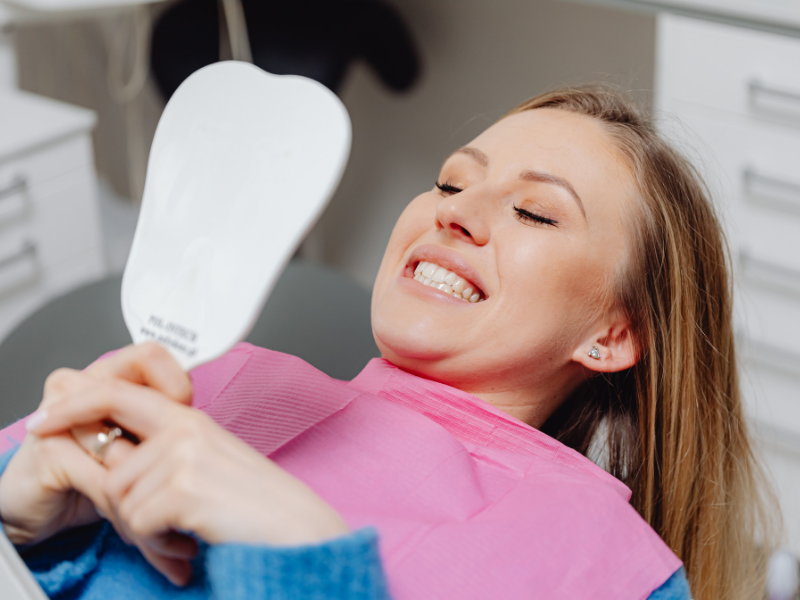
Modern Cosmetic Dentistry Trends — Natural, Minimally Invasive, and Built to Last
Insights from an English-Speaking Cosmetic Dentist in Çankaya, Ankara
A smile is one of the most expressive features of the face — and cosmetic dentistry has evolved significantly in how it approaches improving one. Today, aesthetic dental care goes well beyond whitening or placing crowns. At our clinic in Çankaya, Ankara, modern cosmetic dentistry means digital planning, minimal intervention, and results that look genuinely natural. This article outlines the most relevant current trends and what they mean for patients seeking aesthetic dental treatment in Turkey.
Contents
How the Approach to Cosmetic Dentistry Has Changed
For a long time, cosmetic dentistry was associated with a particular look — uniformly bright, slightly oversized teeth that were immediately identifiable as “dental work.” That aesthetic has largely given way to something more considered: results that are harmonious with the individual patient’s face, proportions, and natural tooth structure.
Contemporary cosmetic dental planning takes into account a patient’s facial symmetry, lip line, gum level, and even the way teeth move during speech and expression — not just how they look in a static photograph. The objective is a smile that feels right for the person wearing it, not one that conforms to a generic template.
Two developments in particular have shaped this shift: the move to digital treatment planning, and a growing emphasis on preserving as much natural tooth structure as possible. Both trends have made cosmetic outcomes more predictable and more comfortable for patients.
What Is Digital Smile Design?
Digital Smile Design (DSD) is a planning methodology that uses photographs, facial measurements, and computer-assisted analysis to map out aesthetic dental treatment before it begins. Rather than working from approximations, the clinician works from precise proportions specific to that patient.
The process typically involves analysing ideal tooth-to-tooth and tooth-to-face ratios, evaluating the gum line in relation to the lip, and — in many cases — producing a visual simulation that allows the patient to see a projected outcome before committing to treatment. This is particularly valuable when planning multiple restorations or full smile makeovers (gülüş tasarımı).
Digital planning has also improved collaboration between the dentist and dental laboratory, which directly affects the quality and fit of the final restorations. When every element of the design is documented digitally, the margin for error narrows considerably.
Minimally Invasive Techniques
One of the most significant shifts in cosmetic dentistry over recent years has been the move toward preserving natural tooth structure wherever possible. This philosophy — often described as minimally invasive dentistry — prioritises achieving aesthetic goals with the least amount of irreversible change to the tooth.
Porcelain Veneers (Porselen Lamina)
Veneers involve bonding a thin layer of porcelain to the front surface of a tooth to alter its shape, colour, or proportion. When done well and planned correctly, the preparation required is minimal — often limited to a very shallow reduction of the enamel surface, or in some cases none at all.
The result is a natural-looking improvement that does not compromise the structural integrity of the underlying tooth. Veneers are commonly used to address discolouration that does not respond to whitening, minor misalignment, chips, or uneven proportions.
Composite Bonding
Composite bonding uses tooth-coloured resin material to reshape or restore a tooth’s appearance. It is typically completed in a single appointment, requires no laboratory work, and involves minimal or no removal of tooth structure. For patients with minor aesthetic concerns — small gaps, minor chips, or slight irregularities — bonding can be a highly effective and conservative option.
Natural-Look Materials
The materials used in cosmetic restorations have changed considerably. Earlier generations of ceramic and porcelain restorations were often opaque and highly reflective — producing a result that looked visibly artificial in certain lighting conditions. Current materials are engineered to closely mimic the optical properties of natural enamel.
Zirconia and advanced layered porcelain systems offer a degree of translucency that allows light to interact with the restoration in a way that resembles natural tooth tissue. This means the restoration does not appear as a flat, uniform surface, but has the depth and variation that characterises real teeth.
The practical implication for patients is that restorations placed today are considerably harder to distinguish from natural teeth than those placed ten or fifteen years ago — and they are designed to perform well over the long term with appropriate maintenance.
Gum Aesthetics — The Often Overlooked Element
A well-designed smile is not only about the teeth. The gum line — its height, symmetry, and colour — plays a significant role in the overall appearance of a smile and is frequently a factor in cosmetic dental planning.
Some patients present with what is commonly described as a “gummy smile,” where an excess of gum tissue is visible above the teeth when smiling. Others may have an uneven gum line that disrupts the visual balance of the smile. Both conditions can be addressed through gum recontouring procedures.
Laser-assisted gum treatments allow for precise tissue removal with reduced bleeding and faster recovery compared to conventional techniques. When gum aesthetics are addressed as part of a broader cosmetic plan, the final result tends to be more cohesive and balanced than if teeth are treated in isolation.
Cosmetic Dentistry in Çankaya, Ankara
Our clinic in Çankaya, Ankara provides cosmetic dental treatments for both local patients and international visitors. We work with patients who are based in Ankara — including expats, diplomatic staff, and international students — as well as those who are visiting Turkey specifically for dental treatment.
Our approach to cosmetic dentistry is individual-led. Every case begins with a thorough clinical assessment and a conversation about what the patient wants to achieve. We do not apply a standard formula to aesthetic cases; the treatment plan is shaped by the patient’s specific facial anatomy, dental condition, and personal expectations.
We communicate in English throughout the process — from initial consultation through to aftercare instructions — so that patients from outside Turkey can engage fully with their treatment plan without relying on translation.
Related Treatments at Our Clinic
Frequently Asked Questions
Are cosmetic dental restorations permanent?
The longevity of cosmetic restorations depends on the material used, the clinical planning, and how well the patient maintains their oral hygiene. With appropriate care, many restorations perform well over a significant number of years. Your dentist will outline what to expect for your specific treatment during the consultation.
Can Digital Smile Design be used for any patient?
Digital analysis can be incorporated into most cosmetic treatment plans. However, the specific techniques and restorations recommended will always be determined by a clinical examination and an assessment of the individual patient’s dental and facial anatomy.
Are minimally invasive veneers as durable as traditional ones?
When planned correctly and applied to suitable cases, minimally invasive veneers can be both aesthetically successful and functionally durable. Case selection is important — your dentist will assess whether this approach is appropriate for your specific situation.
Will cosmetic restorations look natural?
With current materials and a patient-centred planning approach, cosmetic restorations can closely replicate the appearance of natural teeth in terms of colour, translucency, and proportion. The aim is always a result that is in harmony with the patient’s individual features, not a generic aesthetic.
I am coming to Turkey for a smile makeover — what should I expect?
International patients typically attend for an initial consultation and clinical assessment, during which a treatment plan is prepared and discussed. Depending on the complexity of the case, some treatments can be completed across a planned visit, while others may require multiple appointments. We recommend contacting us before your trip so we can help structure your schedule appropriately.
How is cosmetic dentistry in Turkey different from what is available in my home country?
The clinical standards, materials, and techniques used at well-equipped clinics in Turkey are broadly comparable to those in Western Europe. Patients often choose Turkey for dental treatment because access to qualified specialists and modern facilities is available at a different price point than in their home country. That said, the most important factor in any cosmetic dental outcome is thorough planning and honest communication — which we prioritise regardless of where a patient is from.
Book a Cosmetic Consultation
📍 Mustafa Kemal, 2131. Sk. No:30 İç Kapı No:15, 06510 Çankaya / Ankara